OZY builds a working simulation of your organisation, the people as much as the plan, so you can test a hard decision while it still costs nothing.
Built on a decade of transformation science, and years spent in the room with real teams. The model is built from what actually moves people, not just the org chart.
Built by people who've sat in the room.
I met a traveller from an antique land
Who said—“Two vast and trunkless legs of stone
Stand in the desert... Near them, on the sand,
Half sunk a shattered visage lies, whose frown,
And wrinkled lip, and sneer of cold command,
Tell that its sculptor well those passions read
Which yet survive, stamped on these lifeless things,
The hand that mocked them, and the heart that fed;
And on the pedestal, these words appear:
My name is Ozymandias, King of Kings;
Look on my Works, ye Mighty, and despair!
Nothing beside remains. Round the decay
Of that colossal Wreck, boundless and bare
The lone and level sands stretch far away.”
Every failed transformation had an inscription too: a strategy, written down, signed off, carved into a slide.
The strategy is signed off. The model shows what the org chart shows. Everything in its place. It appears stable.
Unexpected bottlenecks and resistance appear. The budget gate jams first. Nobody planned for it, because nobody could see it.
The bottlenecks ripple. Suppliers slip, sites stall, people wear down. This is how 88% of transformations fall short.
The same year, simulated before you commit. The risks surface while they still cost nothing to fix. You make the call.
See how the twin is built →Pilots train the emergency in a simulator.
Surgeons rehearse the operation before they perform it.
You get one attempt. Live. With the whole organisation watching.
OZY is the rehearsal.
It builds a working simulation of your organisation, then plays your decision forward through it.
The technical name for that model is a digital twin for organisations.
What it modelsYou see what breaks, while breaking it still costs nothing.
Ozy holds the model. You make the call.
Why this isn't magic: the science →OZY is organisational transformation software that builds a living digital twin of an organisation. It models the structure and the coordination around it: decision rights, dependencies, workload, approval routes, and the points where those break down. Most organisational change software reports what already happened. OZY works as scenario planning software for the whole organisation, playing a decision forward under stated assumptions and surfacing early warning signals before you commit to it. A digital twin for organisations models how work and decisions move between people. It does not assess individuals or infer anyone's inner state. Built for impact scale-ups and for enterprises in transformation.
Most of those plans were very good ones. Written down, signed off, and carved into a slide.
One failure underneath all three: the organisation could not absorb the change. Dependencies multiply faster than any team can track. A 60-person scale-up already passes that limit.
Failed change destroys up to three-quarters of the impact an organisation set out to have. Lower the failure rate and that impact simply survives.
Both horizons are our own modelling. We will show the working to any pilot partner who asks.
No clean data needed. CSRD reports, strategy documents, meeting notes, email threads, and a 20–30 minute stakeholder questionnaire.
One model out of all of it. Everything carries a label: what you told us, what we inferred, and what we are still guessing at.
Push a decision through it and watch where it strains. Weeks before it would strain in the room. Change one answer and run it again.
You have to make decisions you cannot take back, without seeing what they set off. OZY makes that visible.
Market entry, pricing, the first twenty hires, which partner to sign. Close to irreversible, decided on incomplete information, with a clock running.
BackSustainability transitions, post-merger integration, restructuring. The plan is rarely the problem. Getting eleven departments to move together is.
BackOzymandias was the king on that statue: all certainty, no foresight. We took his name so we would never inherit his blind spot. Ozy is smaller, friendlier, and on your side. But it remembers.
We are early, and we would rather say so.
7 design partners confirmed · more in conversation · limited places · questions first? the FAQ →
The card below walks the same five steps as the live demo. The first three run on a working model. Answer two questions, watch your twin build, push a change through it.
Steps four and five respond to your choice too, on a sample organisation's numbers rather than a live simulation.
OZY is a digital twin for organisations and scenario planning software for organisational transformation. It runs as a continuous loop. Measure: structured stakeholder intake plus strategy documents, reports and meeting notes. Analyse: an explainable model of decision rights, dependencies, workload and coordination, with every claim labelled stated, inferred or uncertain. Improve: bottleneck hypotheses, pathway options and 30-day experiments with owners and evidence attached. Each cycle updates the twin, so the model sharpens for as long as it lives with the organisation. OZY explores plausible scenarios rather than predicting outcomes, and it does not assess individuals or infer anyone's inner state.
Describe a decision, event, or shock. The twin projects how it ripples through the system over the next 12 months.
Sit with them side by side. Pick the one you'd try first. The brief writes itself around your choice.
EmberPath · 51–200 people, climate hardware. Modular residential heat pumps; Lisbon HQ, assembly outside Porto.
The real intake is detailed: 20–30 minutes per stakeholder, because the model is only as honest as your answers. Here it comes pre-filled; retap to make it yours.
Tension burns orange. Strengths hold green. Drifting shows gold early, a warning signal before it becomes a problem. Your actors carry a white ring. Zoom from system to people.
A decision, an event, a shock. Describe it or pick a card, and watch it ripple through the next twelve months. Live, against your own baseline.
Three moves, side by side: how long, what it costs, how risky, how sure we are. Pick one; the brief writes itself around your choice.
Findings, your chosen pathway with its trade-off, and a 30-day experiment to start with. Export it, share it, act on it.
Ozy holds the model. You make the call.A report ages the day it is printed. OZY is built to stay with your organisation and run as a rhythm:
Intake, documents, and what actually changed since the last cycle.
The twin recomputes: bottleneck hypotheses, risks, and pathway options, each with its evidence.
Pick a pathway, run a 30-day experiment, and watch the early warning signals.
Every lap sharpens the model, because it is corrected against what really happened rather than what was planned. The longer OZY lives with your organisation, the harder your organisation is to surprise.
Industrial twins model machines. Consultancies model the org chart. Neither survives contact with an actual Tuesday.
BackTen years of peer-reviewed method is the engine, not the marketing. The research continues, so the moat deepens.
BackEvery signal carries its source. Every projection shows its working. Nothing decides on your behalf.
BackThe full model reads your documents, your questionnaire, your organisation. The MVP goes live in September, and the design partners are shaping what it becomes.
Two minutes, no sign-up · or read the science behind it first →
Why this is not magic. A research-backed model of how transformation behaves in real organisations, and a disciplined method for turning evidence into decisions you can defend.
The product page shows what it does. This one shows why it holds.
The science behind OZY: a peer-reviewed methodology for modelling organisational systems, developed over a decade of transformation research and eight years of consultancy practice, validated across a dozen organisations during a PhD at Maastricht University. OZY analyses governance and decision rights, incentives and constraints, culture and meaning, capabilities and learning loops, and stakeholder interdependencies on top of structural assets. Its research foundations span systems and transformation science, the inner and human dimension including the Inner Development Goals, and action research with co-produced knowledge. Outputs are evidence-linked, auditable, and framed with confidence levels. OZY does not assess individuals and does not infer anyone's inner state.
“Resistance” is usually a rational response to system conditions, not a failure of communication.
Three interconnected research lineages. Each one informs how OZY is built and how we interpret what we find.
Systems thinking and leverage points: how change compounds and where interventions backfire. Sustainability transitions and socio-technical systems: multi-level change and governance dynamics.
BackHow change is felt and enacted by real people: organisational culture and psychosocial dynamics; transformative learning and capability formation, grounded in the Inner Development Goals.
BackKnowledge co-produced through iterative cycles: diagnose, intervene, observe, learn, adapt. We distinguish evidence, inference and assumption, and label each clearly.
Back“We do not treat organisations as machines with inputs and outputs; we treat them as human systems shaped by structure, relationships, meaning, and power.”
Deeper bibliographies and citations available upon request.
The research-backed factors behind stalls, failure modes, and leverage points.
Captures evidence, maintains provenance, makes reasoning explorable. It does not replace the method.
What makes this different from “RAG + a nice UI”:
Of transformation dynamics, not retrieval of generic advice.
Evidence-linked, auditable, framed with confidence levels.
The twin updates through iteration, not one-shot reporting.
Diagnostic baseline of your system's current pattern.
Where strategy, governance, culture align, or pull apart.
Ranked entry points. Sequenced first moves.
So leaders can act, not build more slides.
In , two things were made. Only one of them is still here.
An empire. A capital. A statue of himself, and an inscription telling everyone to despair at it.
Gone. Sand in every direction.A reading of a human face: the passions caught so exactly that they still survive on the wreckage.
Still legible, three thousand years on.Structure is easy to draw and quick to fall. The reading is what holds. That is a two-hundred-year-old poem making a modern argument, and it is the one OZY is built on.
We're happy to walk through our methodology, research foundations, and how OZY would work with your organisation's specific context. No commitment, just a conversation.
Deeper methodology and references available upon request
We named the company after a tyrant, the king in , so we would remember never to build for one.
We protect what matters most in transformation, meaning people, dignity, agency and evidence quality, by keeping humans meaningfully in the loop at every consequential decision.
OZY ethics and responsible AI: humans stay meaningfully in the loop at every consequential decision; every signal is traceable to an inspectable source; OZY will never enable surveillance-led performance monitoring, extractive uses, or optimisation for speed at the expense of psychological safety. Seven operating principles govern the product: impact over optics, learning without ego, accountability with those affected, human agency and capacity, psychological safety by design, adaptive not rigid, and an active stance rather than neutrality. Governance mechanisms include human-in-the-loop checkpoints, decision rationale and audit trails, evidence quality and provenance tracking, structured reflection, and stakeholder dialogue.
These govern how OZY thinks, acts, and earns your trust, not as marketing but as practice.
OZY is a thinking partner, not a decision-maker. Every recommendation is a prompt to reflect, discuss, and act, never a mandate. Human sign-off is required before any intervention, and OZY flags its own confidence and blind spots.
BackNo black boxes. Every signal links to a source you can inspect, question, and override; every diagnostic traces to specific inputs. If OZY can't substantiate a claim, it says so.
BackTransformation that respects human dignity, ecological limits, and organisational health. Never surveillance-led monitoring, extractive uses, or speed at the expense of psychological safety. Not disclaimers. The reason we built this.
BackTap any principle for what it means, and what it rules out.
We prioritise real-world positive outcomes over hype, speed, prestige, or short-term profit. This means we won't ship “impressive” AI features that undermine trust, well-being, or integrity, even if they sell.
We treat being wrong as part of doing responsible work, and build reflection into our operating rhythm. This means we will iterate based on evidence and critique; we won't defend decisions just because they're ours.
We take responsibility for harm and missteps, and remain in dialogue with stakeholders, especially those affected. This means we will invite critique and act on it; we won't hide behind the model, complexity, or legal cover.
We design AI to strengthen human judgement, dignity, and capability, not replace or shrink them. This means we keep humans meaningfully in the loop for consequential decisions; we won't build systems that deskill or disempower.
We protect well-being inside our team and in the organisations we serve, because safe people make better decisions. This means we design for supportive, non-punitive use; we won't enable fear-based management practices.
We stay responsive as contexts change technically, organisationally and societally, and we treat rigidity as a risk. This means we will pivot when reality changes; we won't lock clients or ourselves into brittle, one-way systems.
We recognise AI is political in its impacts; we choose a direction aligned with justice, sustainability, and human rights. This means we won't copy extractive business models or build for harmful power asymmetries, even when that is industry standard.
These aren't statements on a wall. They're mechanisms woven into how OZY thinks, how we build, and how we're governed.
“When trade-offs are necessary, we choose impact, accountability, and human agency, even at a cost.”
Pilot partners get the boundaries in writing before any data moves, and the model deleted or handed over when the pilot ends. Open the demo and you can see for yourself what the twin reads, and what it never asks.
Two minutes, no sign-up, sample organisation.
Five steps from your reality to a report you can keep. You drive; the twin shows you what it sees. Nothing you enter is stored.
Please don't enter confidential or personal data.
The real intake is detailed: 20–30 minutes per stakeholder, because the model is only as honest as what you feed it. In the demo, choose pre-filled answers and skip straight ahead.
Stakeholders, systems, and the dependencies between them, with tension, strength, and drifting marked so you can see at a glance where your system stands.
A decision, an event, a shock. Describe it or pick a card, and watch it ripple through the system over the next twelve months.
Different routes to the same goal, side by side: what each one clears, what each one breaks, and what it costs you to find out late.
A baseline snapshot of your system: top pressure points, quick wins, and a 30-day experiment to start with, emailed to you if you want it.
Ozy holds the model. You make the call.
Open the demo →We combine deep expertise in systems change, product, psychology, and ethical AI, to build something the world of transformation genuinely needs.
Everything in that poem is second-hand. The king is long dead and the empire is sand. The only reason we know any of it is that someone went, looked carefully, and came back to say what they saw.
That is the job we take. Not the king. The traveller.
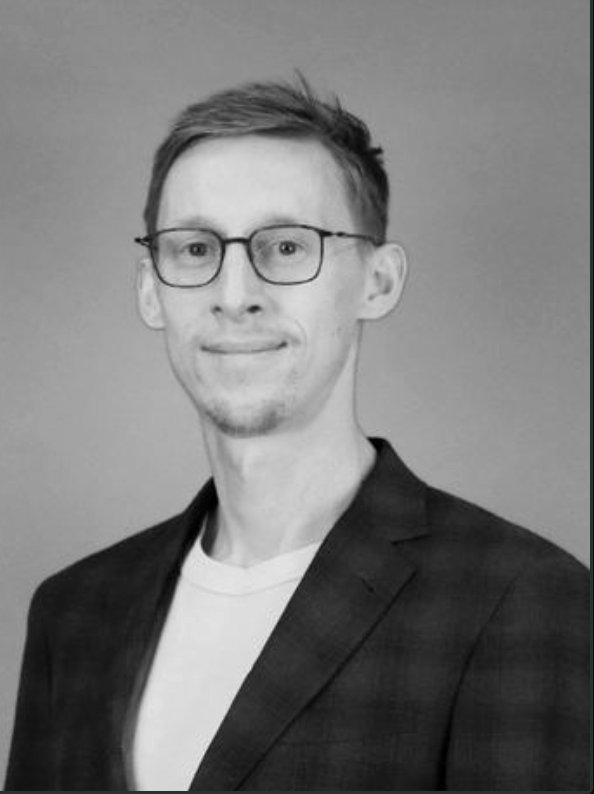
Founder since 2018. 17+ years in systems change, action research & climate ventures across Europe. PhD organisational transformation behind Ozyntel's core technology. Led change strategies across universities, ecosystems & movements.
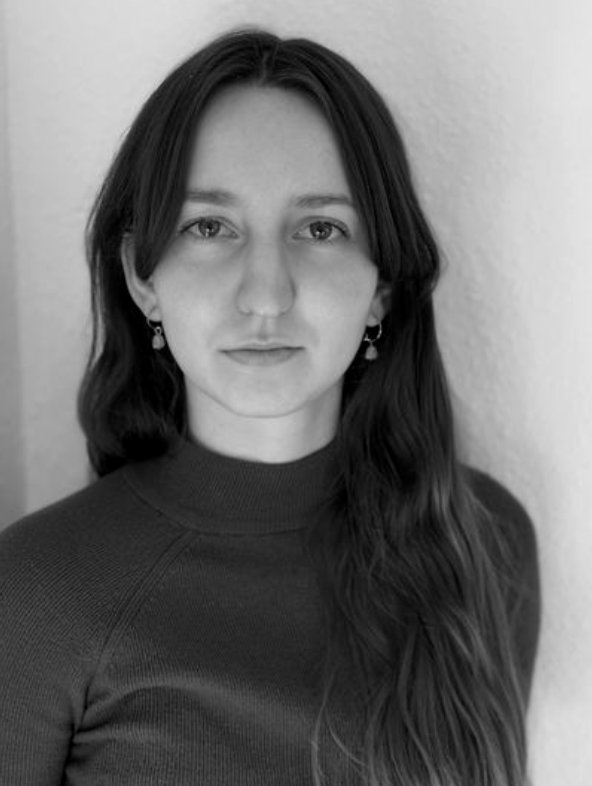
Former founder with experience in circular economy ventures and early-stage venture building. Has conducted research at the intersection of sustainability and organisational transformation. Holds an MSc in Sustainability Science and Business.

Track record of product leadership across 3 SaaS companies, on top of 7 years of clinical neuropsychology. Experience building and scaling products across 4 startups, spanning hands-on delivery, implementation, programme design, and applied research and development.
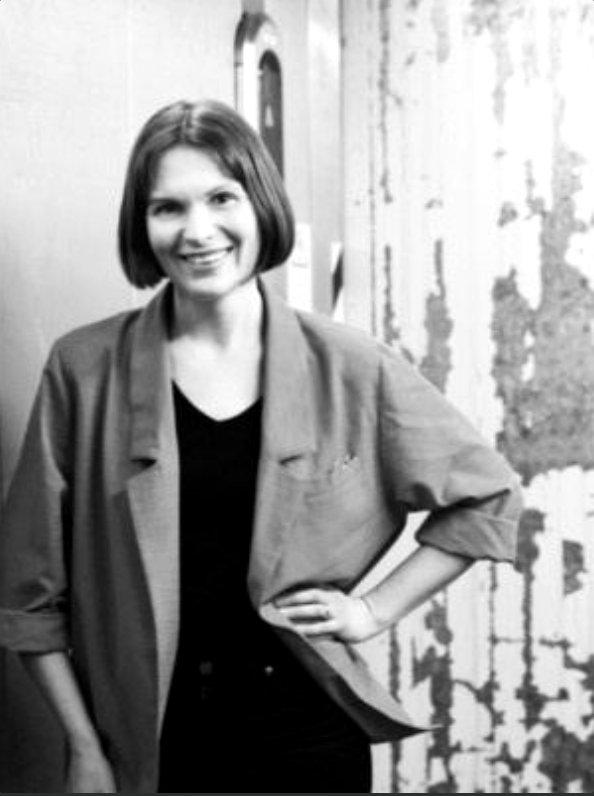
Brings a decade of professional facilitation experience across industries and sectors, alongside seven years designing learning and development programmes. Creator of an ethical AI maturity model and an active advisor on ethical AI capability development within organisations.

Translates complex ideas into accessible narratives for the right audiences. Leads brand communications and growth. Completing MSc Strategic Marketing and bringing a cross-cultural perspective, combining high-performance discipline with a deep interest in how people, systems, and decisions move under pressure.

Behavioural Research Intelligence & Sustainable Design Architect. Centring underrepresented voices in frameworks and methodologies.
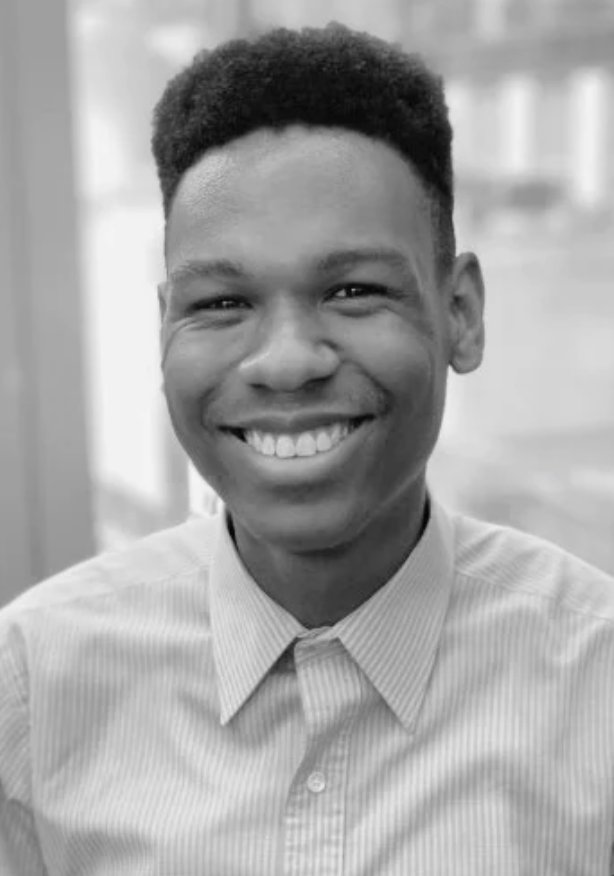
Author of the Sustainability Explainer Series. Contributing research across climate resilience, earth system dynamics and regenerative transformation.
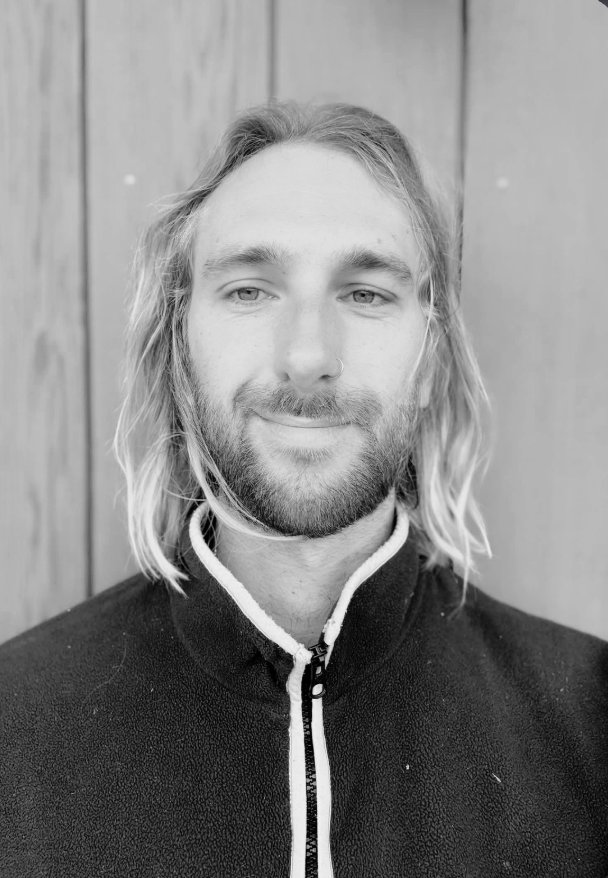
Systemic Justice Researcher. Supporting the organisation in questioning frameworks and centring contrasting and underrepresented perspectives.
The king in the poem had no foresight, and it cost him everything. The collective is where we publish what we learn while building the opposite: research notes, field observations, and the occasional wrong turn, in the open.
At Norrsken House Amsterdam from September · hello@ozyntel.com
Not an account manager. In a pilot you sit with the people on this page: the ones who built the method and who will be in the room when your model is wrong about something.
We publish what we find while we are finding it, including the parts that did not work. The Ozymandias Intelligence Collective lives on Substack.
Why experienced leaders misjudge the same situations in the same directions, and what a model can do about it.
Read on Substack →The distance between a circular strategy on paper and one that survives a procurement cycle.
Read on Substack →What software can and cannot do for adaptation, written without the usual optimism.
Read on Substack →Why we named a company after a ruin, and what we intend to do about it.
Read on Substack →Everything we write about here is built into the product. Open the demo and put the ideas to work yourself.
Exploring a pilot, checking whether OZY fits your situation, or want to argue with something on this site, all welcome. Write below, or email hello@ozyntel.com directly.
Message received.
Thanks for reaching out. We'll get back to you within 48 hours.
Including the questions we would ask if we were you, and the ones where the answer is still “we don’t know yet”.
OZY is built first for impact scale-ups bringing climate and social innovation to mass markets, the kind of organisation making hard, high-stakes decisions about market entry, scaling, hiring and partnerships. The second segment is enterprises undergoing complex transformation: sustainability transitions, post-merger integration, or large-scale restructuring. What they share is one root problem. They have to make consequential decisions without being able to see the consequences.
Most organisational change software picks a side. Either the structural one, meaning processes, governance and reporting, or the human one, meaning surveys and engagement scores. OZY models both in a single living system: decision rights, dependencies, workload and the coordination between roles, alongside timelines and governance. The distinction that matters is what it reads. It reads how the organisation actually coordinates, not how any individual feels. The unit of analysis is the relationship between roles, never the person in the role, and that is what surfaces bottlenecks purely structural tools miss.
You don't need clean, structured data to begin. OZY works with the messy reality of transformation: CSRD reports, strategy documents, meeting notes, email threads, stakeholder questionnaires. The platform turns unstructured inputs into a coherent system model, and labels every signal as stated, inferred or uncertain so you always know which is which.
AI is used as an assistive layer. It helps structure messy inputs, surface risk signals and highlight contradictions. The logic stays inspectable: every output links to its sources, confidence levels are shown openly, and humans keep full decision-making authority. OZY holds the model. You make the call.
No, and we are careful with that word. What OZY does is scenario exploration: it plays a change forward under stated assumptions, surfaces bottleneck hypotheses with the evidence behind them, and gives you early warning signals to watch, so you can tell whether a pathway is becoming more or less likely. The longer the horizon, the less anyone should trust a point prediction about an organisation. The goal is better preparedness, not prophecy.
Your data stays yours. OZY runs on European-hosted infrastructure, and nothing you provide is used to train models for anyone else. Every signal in your model traces back to the document or answer it came from, so you can audit any claim it makes. When a pilot ends you choose what happens next: we delete your model, or we hand it over to you.
The onboarding questionnaire takes 20–30 minutes per stakeholder. From there, OZY builds and updates the system map continuously as you feed it new information. It is designed to fit around your existing workflow rather than create a new one.
We are not publishing list pricing while the product is in pilot, because scope varies a great deal between organisations. Founding partners get a special founding price, set once and kept as the product matures. There is no commitment needed to start a conversation, and if you need a figure for budget approval we will put one in writing for your scope.
We are working with a small group of founding organisations who shape what OZY becomes. Pilot partners get the full method applied to their own organisation, with our team in the room while it is built, a direct line into the roadmap, and a special founding price that stays theirs as the product matures. It is a genuine collaboration. We build with you, not just for you.
Organisational transformation software builds a working model of how change actually unfolds inside a company, instead of tracking whether a plan is running to schedule. It maps goals, stakeholders, dependencies and decision rights, then lets leaders test where a change is likely to stall before they commit budget to it. That is the category OZY sits in.
Scenario planning software lets you play a decision forward before you commit to it. You describe the change: a reorganisation, a new market, a supplier slipping, a key person leaving. The software then shows what breaks, what holds and what it costs. OZY runs those scenarios against a digital twin for organisations, so they play out through your real dependencies and decision rights rather than a generic template.
It makes the invisible parts visible. Governance friction, competing incentives, capability gaps, stakeholder interdependencies and how much change is already landing on the same few roles all surface before they derail a programme. Leaders can then test different sequencing and resourcing, and compare the trade-offs in advance rather than in hindsight.
A digital twin is a kind of simulation, so the real question is one of scope and shelf life. A one-off simulation answers a single question and then stops: model the scenario, read the result, move on. A digital twin for organisations is a simulation you keep. It holds the whole system, its goals, initiatives, stakeholders, dependencies, decision rights and coordination, and it updates as new evidence arrives, so the next scenario runs against how your organisation is today rather than a snapshot from last quarter. OZY is both. The twin is the model; simulating a change is what you do with it.
Usually not because the strategy was wrong. They fail on systemic dynamics nobody could see in advance: misaligned incentives, governance friction, hidden dependencies, capability gaps, a culture that makes the new way feel unsafe, and too many concurrent changes landing on the same roles. Tools that track only KPIs and milestones miss the coordination layer that decides whether a strategy becomes practice.
Still unanswered? Ask us directly →
The demo runs on a sample organisation, so you can judge the model on something concrete before you decide whether it belongs anywhere near yours.
Two minutes, no sign-up.
Our answer to the boast in .
Built with impact scale-ups, not just for them. Pilot partners are founding contributors to the research: you shape what OZY becomes, and you get the model applied to your own organisation while it is still cheap to change course.
We are early, and we would rather say so.
The full method applied to your real system, with our team in the room. You end with a baseline you can act on: bottleneck hypotheses, pathway options, 30-day experiments.
What you need next is what we build next. That is the whole point of running pilots now.
Set once, at the rate founding partners get, and it stays yours as the product matures. No commitment needed to begin: just a conversation, and a chance to try OZY.
7 design partners confirmed · more in conversation · limited places
Last updated: 30 May 2026
This Privacy Policy explains how Ozyntel ("we", "us", or "our") collects, uses, and protects information when you visit our website or use our services. This is a general template provided for transparency; please review it against your own legal and regulatory obligations before relying on it.
We may collect information you provide directly to us, such as your name, email address, organisation, and any message content, when you contact us, request a demo, or subscribe to updates. We may also collect limited technical information automatically, such as your browser type, device, and general usage patterns, to help us operate and improve the site.
We use the information we collect to respond to your enquiries, provide and improve our services, communicate with you about updates you have requested, and meet our legal obligations. We do not sell your personal information.
Where applicable law requires it, we process personal data on the basis of your consent, the performance of a contract, our legitimate interests in operating our business, or compliance with a legal obligation.
We may share information with trusted service providers who process data on our behalf (for example, email and hosting providers), subject to appropriate safeguards. We may also disclose information where required by law or to protect our rights.
We retain personal information only for as long as necessary to fulfil the purposes described in this policy, unless a longer retention period is required or permitted by law.
Depending on your location, you may have rights to access, correct, delete, or restrict the processing of your personal data, as well as the right to data portability and to object to processing. To exercise any of these rights, please contact us using the details below.
Our website may use cookies and similar technologies to support core functionality and understand how the site is used. You can control cookies through your browser settings; disabling them may affect some features.
We take reasonable technical and organisational measures to protect personal information against unauthorised access, loss, or misuse. No method of transmission or storage is completely secure, however, and we cannot guarantee absolute security.
We may update this Privacy Policy from time to time. Any changes will be posted on this page with a revised "Last updated" date.
If you have any questions about this Privacy Policy or how we handle your information, please contact us at hello@ozyntel.com, or by post at Het Roombeekhofje 2, 7523 JL Enschede, the Netherlands.
How we handle data inside the product is a separate, and stricter, commitment. Read the ethics and trust page →